Last Updated on October 31, 2026
Evidence-based content
All content on ThyForLife is developed from peer-reviewed scientific literature, published clinical guidelines, and data from accredited medical research institutions.
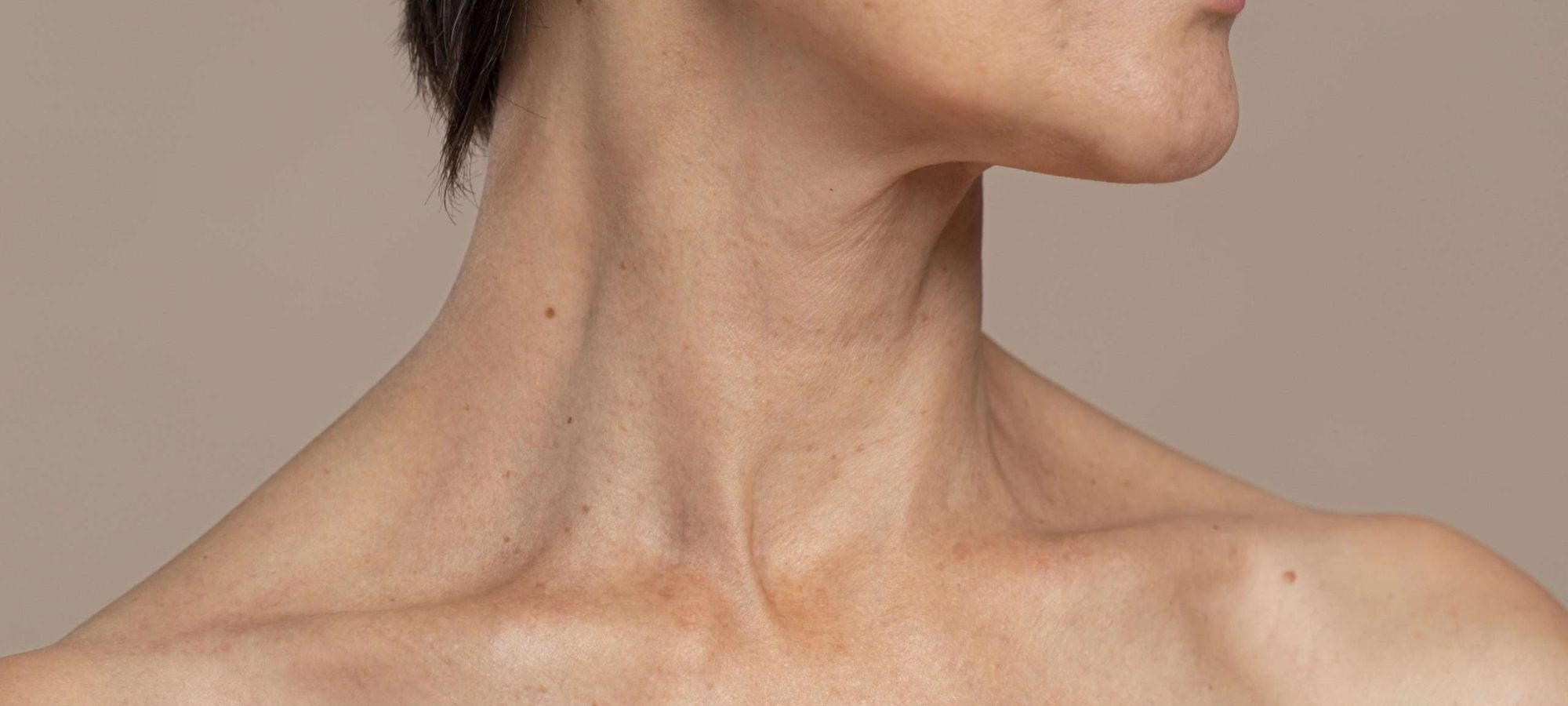
Maybe you went in for a routine check-up. Maybe you had a scan for something else entirely. Either way, the report came back with a phrase you weren’t expecting: multinodular goiter.
It sounds alarming, but it’s one of the most common thyroid findings there is, and the large majority are harmless. Still, “usually harmless” isn’t the same as “safe to ignore.” Here’s what a multinodular goiter actually is, why it develops, and which signs mean it’s time to get it checked.
What is a multinodular goiter?
A goiter is simply an enlarged thyroid, the butterfly-shaped gland at the front of your neck. A nodule is a distinct lump within that gland. Put them together and a multinodular goiter is a thyroid that has grown larger and contains several nodules. In the early stages, the nodules may appear before the gland itself has noticeably grown.
It is remarkably common. Multinodular goiter has been described as the most common structural or anatomical disorder of the thyroid gland, and high-resolution ultrasound finds thyroid nodules in 19% to 68% of randomly selected people, more often in women and older adults. You may also see a newer name on a pathology report. In 2022, the World Health Organization introduced the term “thyroid follicular nodular disease” for this condition.
Doctors divide multinodular goiters into two types based on what the gland is doing:
- Nontoxic: thyroid hormone levels are normal. This is the typical picture, and many of these goiters need no specific treatment once they have been properly evaluated.
- Toxic: one or more nodules produce thyroid hormone on their own, causing hyperthyroidism (an overactive thyroid).
What causes it?
The honest answer is that, in many people, the exact cause is not well understood. That said, several factors are well established:
- Iodine deficiency. Your thyroid needs iodine to make hormone. When iodine runs short, the pituitary gland releases more thyroid-stimulating hormone (TSH) to push the thyroid harder, and that constant stimulation makes the gland grow. This makes iodine deficiency one of the most common causes of goiter worldwide. It is far less common where salt is iodized, but it has not disappeared.
- Uneven growth over time. Thyroid cells are not all identical. Some groups of cells grow and behave differently from their neighbors, and over years these clusters can form nodules. This helps explain why nodules become more common with age.
- Genes and family history. Multinodular goiter can run in families, and researchers have identified several genes linked to inherited forms, including DICER1.
- Autoimmune thyroid disease. People with conditions such as Hashimoto’s thyroiditis frequently have enlarged thyroids with nodules on ultrasound.
Toxic multinodular goiter
Over time, some nodules in a goiter can start making thyroid hormone independently of the body’s normal controls. When they make too much, the result is a toxic multinodular goiter (sometimes called Plummer disease). It mainly affects older adults, particularly women over 55, and usually develops in a goiter that has been present for years.
The symptoms are those of hyperthyroidism: a fast or pounding heartbeat, weight loss, feeling hot, sweating, shaky hands, and nervousness. In older adults the signs can be much vaguer, sometimes just weakness and fatigue. Left untreated, an overactive thyroid can lead to complications such as an irregular heart rhythm (atrial fibrillation) and bone loss.
A surprising trigger is sudden iodine exposureA large, sudden dose of iodine can tip a quiet multinodular goiter into overactivity. The most common source is the iodine-based contrast dye used for CT scans and heart catheterization; the heart medication amiodarone, which contains iodine, is another. A case report published in 2016 described a woman with known multinodular goiter developing an overactive thyroid shortly after a contrast-enhanced CT scan. If you know you have a multinodular goiter, mention it before any contrast scan, and don’t start high-dose iodine or kelp supplements without talking to your doctor first. |
Could it be cancer?
This is usually the first question people ask, so let’s be clear. Most thyroid nodules are benign. Among nodules that doctors evaluate, cancer is found in roughly 7% to 15%, with the risk varying by age, sex, past radiation exposure, and family history.
For a long time, it was assumed that having many nodules made cancer less likely than having just one. Research has challenged that idea, and studies have found that the risk is broadly comparable for multinodular goiters and single nodules. In practice, this means each nodule is judged on its own merits. That’s why guidelines recommend combining ultrasound risk features with clinical factors to decide which nodules need a biopsy, rather than simply sampling the biggest one.
Two more reassuring points. Nodules that are overactive, often called “hot” nodules, rarely turn out to be cancerous. And when thyroid cancer is found, the most common types have a very good outlook after treatment.
When to worry
Most multinodular goiters cause no symptoms at all. Book an appointment if you notice any of the following:
- A lump in your neck that is getting bigger, especially if it is growing quickly
- Trouble swallowing, or a feeling that food is getting stuck
- A hoarse or changed voice that doesn’t go away
- Shortness of breath or a choking feeling, especially when lying flat
- Swollen lymph nodes in the neck alongside the goiter
- Signs of an overactive thyroid, such as palpitations, unexplained weight loss, tremor, or constantly feeling hot
Your doctor will also take a closer look if you had radiation to the head or neck as a child, or if close relatives have had thyroid cancer, since both are recognized risk factors.
The goiter you can’t see
Some goiters grow downward behind the breastbone. This is called a substernal goiter, and because it grows into the chest rather than outward, it may not be visible in the neck at all. It can still press on the windpipe, the food pipe, or major veins. One clue doctors check for is Pemberton’s sign: when both arms are raised above the head for about a minute, the face becomes flushed or congested, neck veins swell, or breathing gets harder.
Seek urgent medical care for noisy, high-pitched breathing (stridor) or breathing difficulty that is getting worse quickly.
How doctors evaluate a multinodular goiter
European guidelines recommend that the initial evaluation include your personal and family history, a physical exam, thyroid function tests, and a neck ultrasound. In practice, this usually looks like:
- A TSH blood test to check whether your thyroid is overactive, underactive, or working normally.
- A neck ultrasound to map each nodule, measuring its size and noting features such as whether it is solid or fluid-filled, the shape of its edges, and any tiny calcium specks.
- A thyroid scan if your TSH is low. It uses a small amount of radioactive tracer to show which nodules are overactive.
- A fine-needle aspiration biopsy for nodules whose size or ultrasound features warrant a closer look. A thin needle collects cells for examination under a microscope.
If everything looks benign, the usual plan is a repeat ultrasound later on, with the interval depending on how the nodules look, from about a year to several years. Worth knowing: the same guidelines discourage ultrasound screening in adults who have no symptoms, because it mostly uncovers harmless nodules and can lead to unnecessary tests and treatment.
Treatment options
Treatment comes down to three questions: Is the thyroid overactive? Is the goiter causing symptoms? Is there any concern for cancer? These questions are important as they are some of the factors that shape the choice. Below is a summary of the main options.
Option | Typically considered when | What to know |
|---|---|---|
Watchful waiting | Hormone levels are normal, there are no pressure symptoms, and evaluation shows nothing suspicious | The most common approach. Involves periodic check-ups and repeat ultrasounds. |
Antithyroid medication | The goiter is toxic (overactive) | Brings hormone levels under control. Can be used before radioactive iodine or surgery, or as a long-term treatment. |
Radioactive iodine | The goiter is toxic; sometimes used to shrink a benign goiter as an alternative to surgery | Taken by mouth. Some people develop an underactive thyroid afterward and need levothyroxine. |
Surgery (thyroidectomy) | Pressure symptoms, concern for cancer, a large or steadily growing goiter, or cosmetic concerns | Removes part or all of the gland. Removing the whole gland means lifelong levothyroxine. |
Thermal ablation (e.g., radiofrequency ablation) | A benign, solid, single or dominant nodule is causing symptoms | A needle-based outpatient procedure under local anesthetic. Treats targeted nodules rather than the whole gland. |
Thermal ablation is the newest option on this list. An Italian national guideline considers it an alternative to surgery for a symptomatic, solid, benign single or dominant nodule, and in one comparative study summarized by the UK’s National Institute for Health and Care Excellence, treated nodules shrank by a median of 71% while untreated nodules grew slightly. It is not suitable for every goiter, particularly large ones with many nodules.
What about thyroid hormone pills to shrink the goiter? This used to be common, but current American Thyroid Association guidelines do not recommend routine TSH-suppression therapy for benign nodules in people who get enough iodine. The doses involved can push the body into mild hyperthyroidism, which carries risks for heart rhythm and bone health. Levothyroxine is still the right treatment if your thyroid is underactive, for example due to Hashimoto’s.
Key takeaways
- A multinodular goiter is an enlarged thyroid containing several lumps (nodules). It is very common, especially in women and older adults.
- Iodine deficiency is a major cause worldwide, but in many people no single cause is ever found.
- Most nodules are benign. Having many nodules does not lower the cancer risk of each one, so each is assessed on its own features.
- Seek medical attention for a growing lump, trouble swallowing or breathing, a lasting hoarse voice, or symptoms of an overactive thyroid.
- Many people need nothing more than monitoring. Treatment depends on hormone levels, symptoms, and any concern for cancer.