Last Updated on April 26, 2026
Evidence-based content
All content on ThyForLife is developed from peer-reviewed scientific literature, published clinical guidelines, and data from accredited medical research institutions.

Biotin is everywhere. It is often promoted for hair growth, stronger nails, and healthy skin, and it is often included in multivitamins, B-complex supplements, and even energy drinks. However, for people with thyroid conditions (or anyone getting thyroid blood tests for that matter), biotin has a little-known but clinically important downside.
This article addresses this downside by answering the following questions:
What is biotin and why do people take it?
We’ve included links to recommended products for easy reference — at no extra cost to you, though we may earn a small commission if you purchase through them.
Biotin (vitamin B7) is a water-soluble vitamin involved in basic metabolism (breaking down carbs, fats, and proteins). The dietary requirement for adults is very small (around 30 micrograms/day), and most people get enough from food. For this reason, biotin deficiency is actually rare in the general population. However, many over-the-counter supplements targeted at hair, skin, and nails contain much larger doses (for example, 2,500–10,000 micrograms = 2.5–10 mg). Some medical treatments use even higher doses.
Biotin can fake your lab results
Track your supplements and lab timing so your results tell the real story. Plus self-care tools for sleep, mental health, and physical wellness designed specifically for people with thyroid conditions. Free on iOS and Android.
Download ThyForLife for FreeWhat effect does biotin really have on thyroid lab tests?
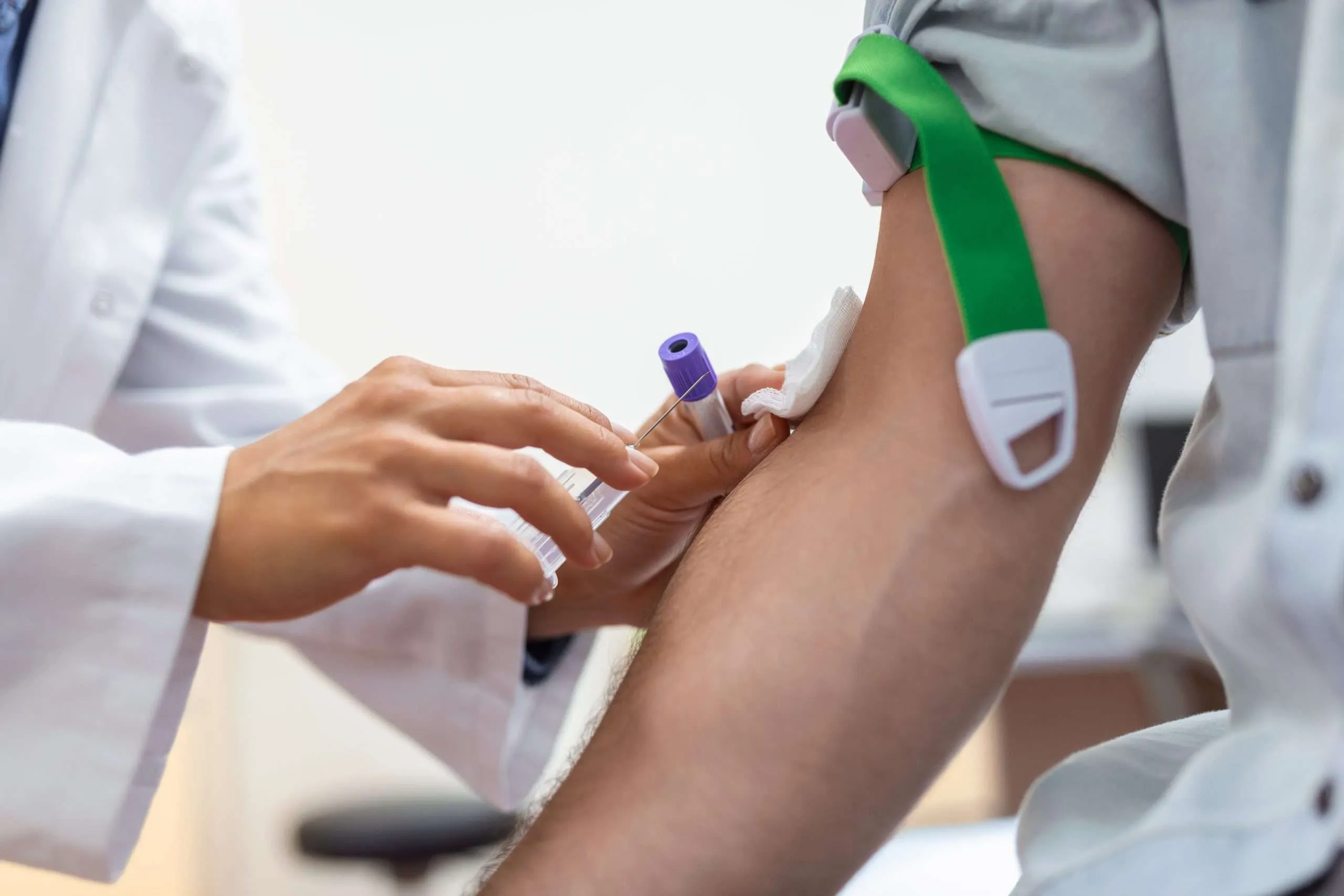
Many automated thyroid tests are built on a system that uses biotin and a protein called streptavidin as part of the test chemistry. When someone has a lot of free biotin in their blood (from supplements, for instance), that extra biotin can out-compete the test components and change the measured signal. This produces falsely high free T3/T4 or falsely low TSH on some platforms. Clinically, this can look like hyperthyroidism (or the wrong dose of thyroid medication) even when the person’s thyroid function is normal.
It’s worth mentioning that the exact pattern depends on the test design and the manufacturer and that not all tests react the same way. This is why clinical context and communication with the lab matter.
How big of a problem is this?
Over the years, the American Thyroid Association has featured several scientific articles concerning this issue in their Clinical Thyroidology® for the Public publication. Some of these include an article published in Thyroid in 2021 and another published in Clinical Biochemistry in 2018. This is to say that a number of cases and laboratory studies have repeatedly documented biotin interference across multiple test platforms and years.
Since thyroid function tests are not the only tests affected by biotin interference, it’s important that there is even broader awareness about this problem. To this end, the FDA has issued warnings, including for other tests like troponin lab tests (to detect and measure heart injury), over the years because the number of reports (including some with serious clinical consequences) rose as high-dose biotin supplements became popular. While not every lab test or manufacturer uses biotin-based chemistry, enough do that this issue is clinically important.
Published in the Journal of Medical Case Reports in 2022 is an interesting case of a 64-year-old man with multiple sclerosis who was misdiagnosed with hyperthyroidism because his high-dose biotin supplement (10,000 mcg/day) caused false lab results. Despite taking anti-thyroid medication for two months, his lab results barely changed. Once the doctors noticed the problem of biotin interference, the biotin was discontinued. His thyroid levels then returned to normal within five, proving the initial diagnosis was a supplement-induced error.
How long before tests should you stop biotin?
Recommendations vary slightly because interference depends on dose and the specific chemistry of the test used by the lab. Also, the “how long” research is not perfect because individual clearance of biotin varies. The safest clinical practice is to report biotin use and follow the lab’s specific instructions when provided. That said, for general supplement (hair/nail products) users, stopping biotin 48–72 hours (2–3 days) before blood draws is reasonable, especially when the dose is not too high.
What are some practical things you can do about this?
- Tell your clinician and the lab that you take biotin. Including the dose and brand can also be helpful. You should not assume they already know.
- Stop biotin before testing usually 48–72 hours for typical doses. For higher doses, this can be longer. Only stop if the supplement is not prescribed for a medical condition. If you are on prescription therapy that contains biotin for a medical condition, discuss with your prescriber before stopping.
- If your results don’t match your symptoms, ask whether biotin interference could be the cause and consider repeating tests after a biotin washout (that is, the recommended period of abstaining from biotin supplements) or using a different test.
- If you take thyroid medication, don’t change your medicine without advice. Because biotin inference may look like your dose is too high (or too low), only a clinician should change treatment after confirming true results.
- Consider choosing a lower-dose biotin supplement. Hair and nail studies typically used 2,500–5,000 mcg, but standard doses around 1,000 mcg are less likely to cause significant test interference. NOW Foods Biotin 1,000 mcg is a well-rated option at that level.
Key takeaways
- Biotin is not dangerous. It does not harm the thyroid.
- High doses can significantly distort thyroid lab results.
- Wrong test results can lead to misdiagnosis or incorrect treatment decisions.
- Always pause biotin before thyroid testing.
- If you take biotin supplements for hair or nails, stop them 48–72 hours before testing (or more precisely, follow the lab’s instructions).
- Biotin clearance varies. For a practical washout, a period 48–72 hours is reasonable, but higher doses can require longer.
- Tell your doctor about all supplements you take.