Last Updated on July 4, 2026
Evidence-based content
All content on ThyForLife is developed from peer-reviewed scientific literature, published clinical guidelines, and data from accredited medical research institutions.

Search “thyroid test” online and you’ll find dozens of finger-prick kits promising lab-quality results without a clinic visit. Order online, prick your finger, mail in a few drops of blood, and a digital report lands in your inbox a few days later. For anyone dealing with fatigue, weight changes, or other vague symptoms, the appeal is obvious. But before swapping a doctor’s visit for a mailer envelope, it’s worth understanding what these tests actually measure, how reliable the numbers are, and where they fall short.
How at-home thyroid tests work
Most kits fall into one of two categories. By far the more common is the mail-in finger-prick test: you prick your finger with a small lancet, place a few drops of blood onto a collection card, and mail it to a laboratory. The sample is processed using the same general immunoassay technology a hospital lab uses, and results are posted to an online portal within a few days. The second, less common, format is a rapid point-of-care strip that gives a quick readout within minutes; these are used mostly in clinics and pharmacies rather than sold directly to consumers.
Nearly every consumer kit measures thyroid-stimulating hormone (TSH), the single most useful first-line marker of thyroid function. Some kits add free T4, free T3, and thyroid peroxidase (TPO) antibodies, which can point toward autoimmune thyroid disease such as Hashimoto’s.
Is the finger-prick sample actually accurate?
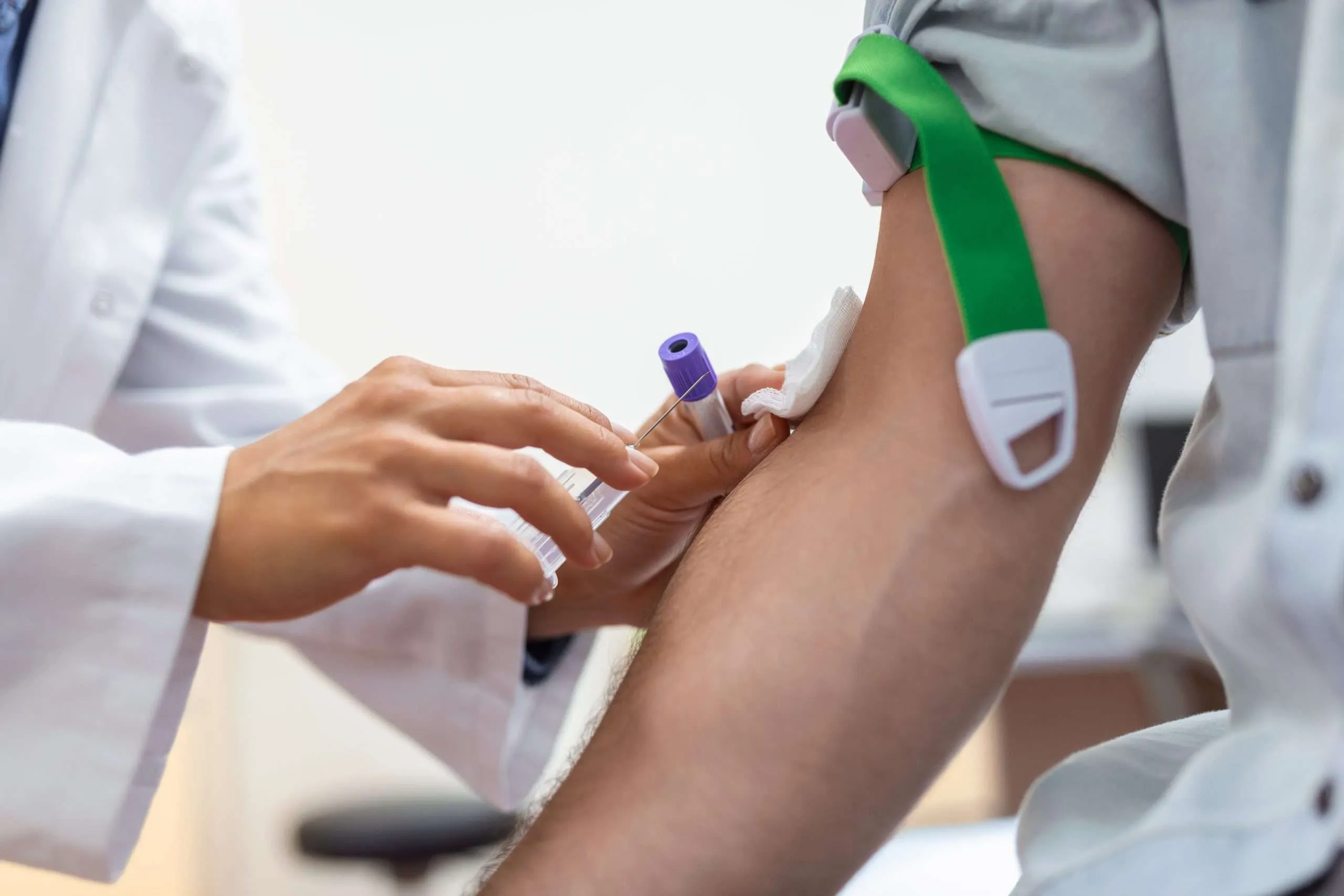
This is the question that matters most, and the underlying lab science holds up well. In one of the more rigorous studies on this exact format, published in the Journal of Medical Screening, researchers compared TSH measured from dried blood spots with TSH measured from a standard venous draw in the same people. Across 118 matched samples, the two methods correlated at 0.99, about as close to perfect agreement as laboratory medicine gets. The same study went on to screen nearly 1,000 adults at community centers and nursing homes using only finger-prick cards, successfully flagging dozens with elevated TSH for confirmatory follow-up.
Agreement between methods in a controlled study isn’t quite the same as a guaranteed result on your kitchen table, though. A few real-world variables can throw off a reading: squeezing the finger too hard can release tissue fluid that dilutes the sample, leftover alcohol from cleaning the fingertip can do the same, and TSH itself naturally fluctuates over the course of the day, generally running higher overnight and lower in the afternoon. Reputable companies in the U.S. route samples to CLIA-certified laboratories. The CLIA (Clinical Laboratory Improvement Amendments (CLIA)) certification is a federal accreditation that signals consistent quality control.
It’s also worth knowing that most direct-to-consumer kits are explicit that their tests aren’t FDA-approved as a packaged product, even though the underlying lab methodology is validated. You can check the FDA’s own database of approved and cleared home tests if you want to see which thyroid-related devices, mostly rapid clinic-use screening cassettes that flag TSH above a single fixed cutoff rather than give a precise number, actually carry that clearance.
One more variable is worth flagging: high-dose biotin supplements, the kind marketed for hair, skin, and nail growth, can distort TSH and other thyroid hormone results on the immunoassay technology many of these kits use. We previously wrote about this in one of our previous blog articles. MedlinePlus also advises talking to a provider about pausing biotin before any thyroid blood test. If you take a biotin supplement, holding off for a couple of days beforehand is a reasonable precaution.
What a home result can (and can’t) tell you
TSH alone goes a long way. As Columbia University endocrinologist Dr. Hyesoo Lowe explained in an interview on at-home thyroid testing, if TSH comes back normal, active thyroid disease is unlikely. That’s exactly why most kits lead with this single marker.
Where things get murkier is the broader panels that also include T3, T4, and TPO antibodies. These additional numbers can be genuinely useful, but interpreting them in isolation is harder than it looks. A mildly elevated antibody level, for example, doesn’t automatically call for treatment, and the right next step depends heavily on a person’s symptoms and history. Dr. Lowe notes that these extra markers are often better discussed directly with a clinician than read cold off a results page.
It’s also worth being clear about what a home test is not. It is not a diagnosis, and it isn’t precise enough to fine-tune a levothyroxine or other thyroid medication dose, a process that depends on small, repeatable changes in TSH measured the same way each time. If a home result comes back abnormal, the standard next step is a confirmatory blood draw and a conversation with a healthcare provider, not a self-directed change in treatment.
Should you test at home at all?
Whether testing makes sense depends on why you’re testing in the first place. If you have symptoms that could plausibly be thyroid-related, fatigue, unexplained weight change, hair thinning, or unusual sensitivity to heat or cold, a home TSH test can be a reasonable, low-friction first step that helps you decide whether a doctor’s visit is warranted.
Routine testing without symptoms is a different story. The U.S. Preventive Services Task Force has reviewed the evidence on screening healthy, non-pregnant adults with no symptoms and concluded that there isn’t enough evidence to determine whether the benefits of screening outweigh the harms, which include false positives and the unnecessary anxiety, or even treatment, that can follow. That doesn’t mean testing is pointless for everyone: people with a family history of thyroid disease, a personal history of autoimmune conditions, or other known risk factors are a different case, and a clinician-guided conversation about whether testing makes sense is generally the better starting point.
Getting the most reliable result
A few habits noticeably improve the odds that a home test reflects your actual thyroid status: test at roughly the same time each morning, since TSH shifts over the course of the day; follow the kit’s fasting instructions if it includes any; let your finger warm up rather than squeezing it hard, which can dilute the sample with tissue fluid; and hold off on biotin supplements for a couple of days beforehand. Choosing a company that’s transparent about which CLIA-certified lab processes its samples is also a reasonable quality signal to look for.
Key takeaways
- The lab science behind dried-blood-spot TSH testing holds up well: agreement with standard blood draws is excellent, and for many people, a home kit is a legitimate way to get a first read on thyroid function without a clinic visit.
- The real limitations aren’t in the lab science so much as everything around it, collection technique, timing, supplement interference, and the temptation to treat a screening number as a final answer.
- Used as a starting point rather than a diagnosis, an at-home thyroid test can be a genuinely useful tool. Used as a substitute for ongoing medical care, it falls short.
If you’re already managing a thyroid condition or trying to make sense of symptoms alongside a test result, pairing whatever number you get, home or in-clinic, with day-to-day symptom tracking in the ThyForLife app can help you and your doctor spot patterns that a single lab value won’t show on its own.